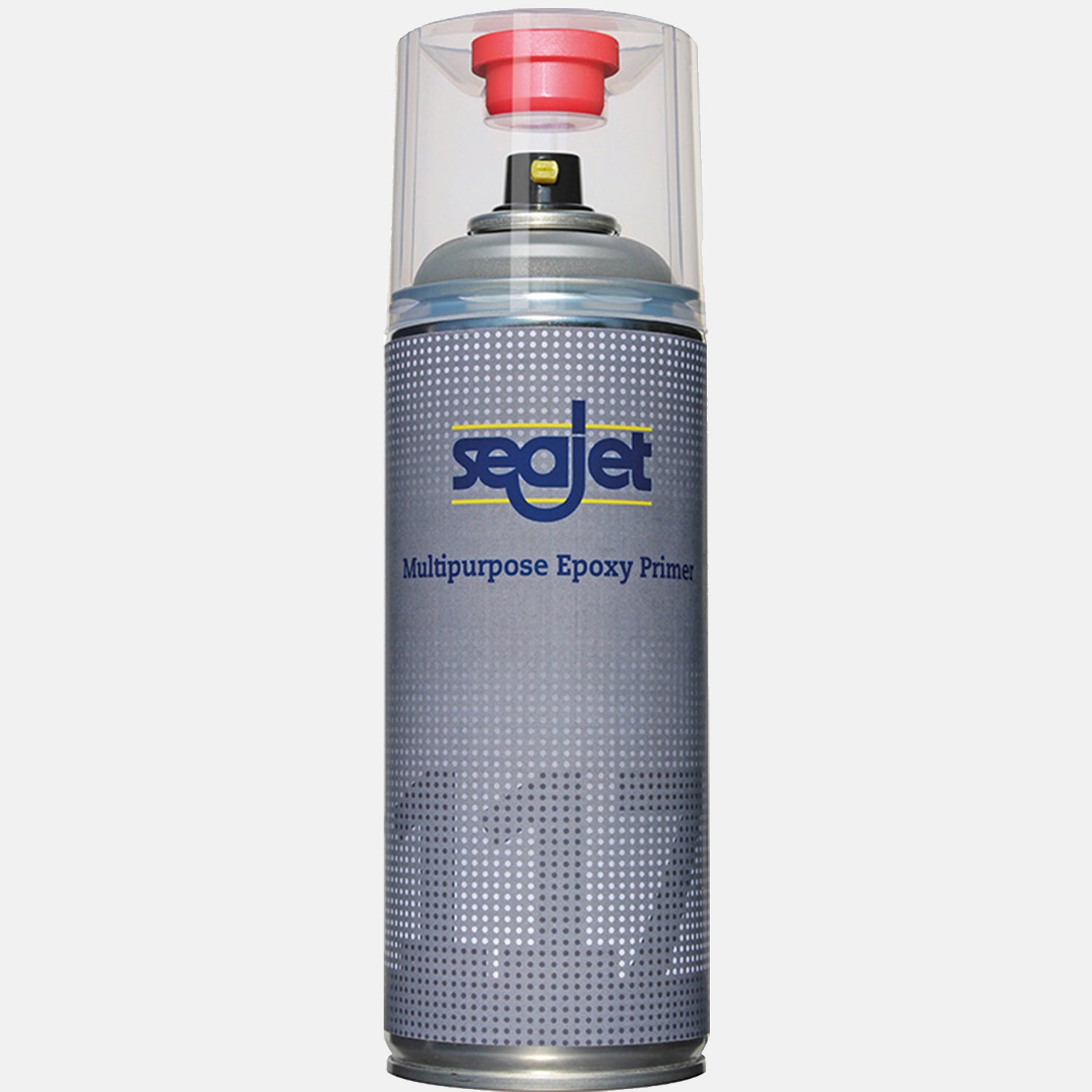
Seajet 117 Multipurpose Epoxy Primer Spray Can
Payment and shipping
Your payment information is processed securely. We do not store credit-card details and do not have access to your full card information.
Shipping
We usually dispatch orders placed before 12 noon on the same business day.
Shipping within Germany costs €6.90 for orders below €149. Delivery within Germany is free from an order value of €149.
Seajet 117 Multipurpose Epoxy Primer Spray Can
SEAJET 117 Multipurpose Epoxy Primer Spray is intended for small areas and local repairs to a compatible epoxy-primer system. The aerosol makes even application on hard-to-reach components easier.
- Use: spot priming and repair of prepared areas
- Substrates: only as specified on the product label and technical data sheet
- Important: not a substitute for the specified full-area multi-coat system
Apply only with adequate ventilation and the prescribed personal protective equipment. Follow the product data sheet for spray distance, flash-off time, overcoating interval and launch time.
Sicherheitsinformationen
Use these resources to choose and apply the right product.
-
Shipping information
We usually dispatch orders placed before 12 noon on the same business day. Shipping within Germany costs €6.90 below an order value of €149; delivery is free from €149.
-
Product selection
The configurator considers hull material, cruising area, speed and the existing coating. Use the comparison table for a direct overview.
-
Frequently asked questions
Find answers about coat numbers, primers, surface preparation, maintenance and safety in our antifouling FAQ.
-
Contact
For an unknown existing coating or damaged substrate, please send us photos and details of the boat, hull material and cruising area through the contact page.
FAQ
Visit our guides to learn more.
How many coats do I need?
The number of coats is product-specific. Many antifoulings are applied in two coats for a first application; Seajet 034 may require three coats for potential multi-season protection. Seajet 021 EKO and Seajet 2300 are applied in two coats. The Bioclean system consists of two coats of Tie Coat and two coats of Clear Coat. The current technical data sheet is always decisive.
Do I need to remove the old antifouling?
A firmly adhering, compatible existing coating can be cleaned, prepared and overcoated, depending on the product. Flaking, cracked or unknown layers must be removed back to a sound system. The compatibility table shows whether direct overcoating is possible or a barrier coat is required.
Do I need to use a primer?
Not always. A suitable primer system is required on bare substrates, for corrosion or osmosis protection, and between unknown or incompatible systems. Preparation according to the data sheet may be sufficient on a sound, compatible existing coating. Seajet 117 is used as an epoxy primer and barrier coat; Seajet 015 can be used as an adhesion or barrier coat. Function and coat number depend on the substrate and data sheet.
Why do you only sell Seajet coatings?
We focus on Seajet so that antifouling, primers, thinners and topcoats can be selected as clear, compatible systems. Technical data, compatibility information and specific coverage figures form the basis of the configurator and quantity calculations. The individual product must still be suitable for the hull material, cruising area and use.
How often should I renew antifouling?
Inspect the coating when the boat is hauled out and before every season. Renewal depends on the product, film thickness, time afloat, use, cruising area and fouling pressure. Renew the coating when the minimum film has been consumed, significant fouling develops or the surface is damaged. A contrasting first coat can act as a wear indicator on self-polishing products.